 Safari in Tanzania & Zanzibar
Home › Guides › When Is the Best Time to Visit Tanzania for a Safari and Zanzibar?
When Is the Best Time to Visit Tanzania for a Safari and Zanzibar?
The best time to visit Tanzania for a safari is June to October, when the dry months give clear skies, and Zanzibar is also at its driest in the dry months. This guide sets each month against the parks, the migration and the Zanzibar rains.
Quick answer Best months at a glance
The best time to visit Tanzania for a safari is the dry season from June to October, and the Tanzania Meteorological Authority calls June, July, August and September the dry months for the entire country. Zanzibar has its own rain pattern, with long rains from March to May and short rains from October to December. For a safari and Zanzibar in one trip, June to October lines up the clearest park weather with the driest beach weather. The Ndutu plains suit late December to April, when the migration herds arrive, so that is the other window worth planning around.
Key takeaways
- Dry season June to October suits most parks, see which month is best.
- The Zanzibar rains differ from the park rains, see the Zanzibar rain pattern.
- Day trips from Zanzibar run on the dry-season calendar, see Mikumi and Nyerere timing.
- Compare fly-in options on the safari in Tanzania and Zanzibar homepage.
What Month Is Best to Go to Tanzania?
June to October is the best stretch for wildlife, and the dry months bring the herds to the northern Serengeti.
The best time to visit Tanzania depends on what you want to see, but one window works for most safari plans.
The Dry Season Window
The best time to visit Tanzania is the dry season, from June to October. Wildlife viewing is generally at its best then. Animals gather around waterholes and rivers, so they are easier to spot, and there are fewer mosquitoes because there is little to no rain. Skies are clear and most days are sunny.
The Tanzania Meteorological Authority names June, July, August and September as the dry months for the entire country. It also describes January and February as a relatively dry transition.
There are trade-offs. Mornings and nights get cold, so bring warm clothing. It is also high season, and some areas get crowded.
Month-by-Month Table
This table sets the main months against what each one means for a safari. Park weather follows the Tanzania Meteorological Authority. The migration column describes where the herds usually are, never a promise of a sighting.
| Months | Park weather | What the safari gives you | Watch out for |
|---|---|---|---|
| January to February | Relatively dry transition | Herds arrive on the Ndutu plains | Green scenery makes game harder to spot in some parks |
| March | Peak of the wet season begins | Herds move on from the Ndutu plains | Long rains and rising road risk |
| April to May | Heavy rain | Low season and quiet parks | Jeeps get stuck in mud, so ask your operator about the road plan |
| June | Dry months begin | Dry-season game viewing starts | Mornings and nights are cold |
| July to October | Driest of the year | Clear skies and wildlife around water | High season and crowds |
| November to December | Short rains begin | Green scenery and quieter parks | Showers and slow muddy roads |
Source: Tanzania Meteorological Authority.
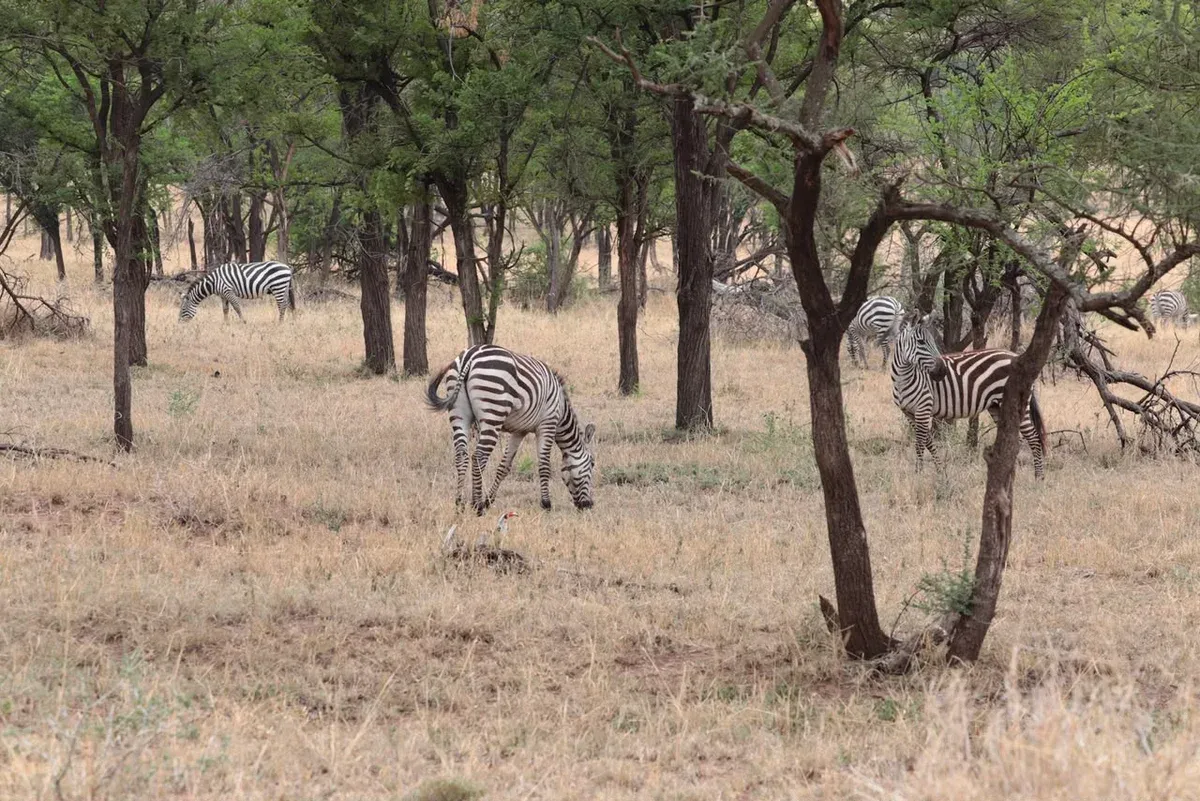
In the dry months from June to October the grass thins and animals gather near water. Photo: Agness Abubakar Saidi, CC0, via Wikimedia Commons
Is the Wet Season a Bad Time for a Safari?
The heavy rains of March to May are the weak point, but November to February still gives good safari days with quieter parks.
Tanzania's wet season is not one block of bad weather, and the months differ a lot.
March to May: The Peak of the Rains
March to May is the peak of the wet season. By April and May the conditions are too wet for safaris in many parks. Jeeps get stuck in the mud and the wildlife is difficult to spot. Canada warns that the rainy seasons, March to May and November to December, can make roads in Tanzania hazardous or impassable.
Low season brings lower rates and less crowded parks, but only book it if you accept the mud.
- Roads: hazardous or impassable in the rainy seasons, says Canada
- Upside: lower rates and less crowded parks
November to February: The Green Season
The green season, between November and March, is much quieter.
The Tanzania Meteorological Authority treats January and February as a relatively dry transition. The Ngorongoro area officially has a rainy season from November to April, so the NCAA advises a 4x4 for muddy ground.
Sources: Global Affairs Canada, NCAA.
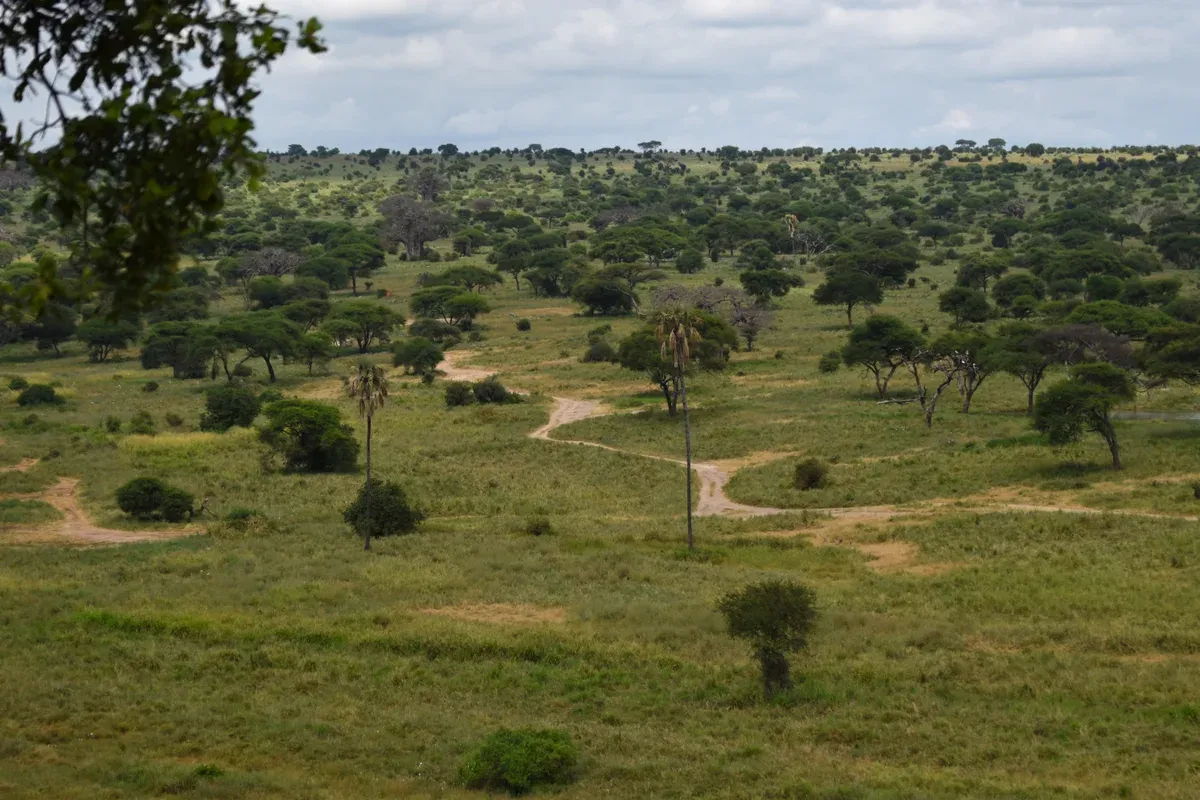
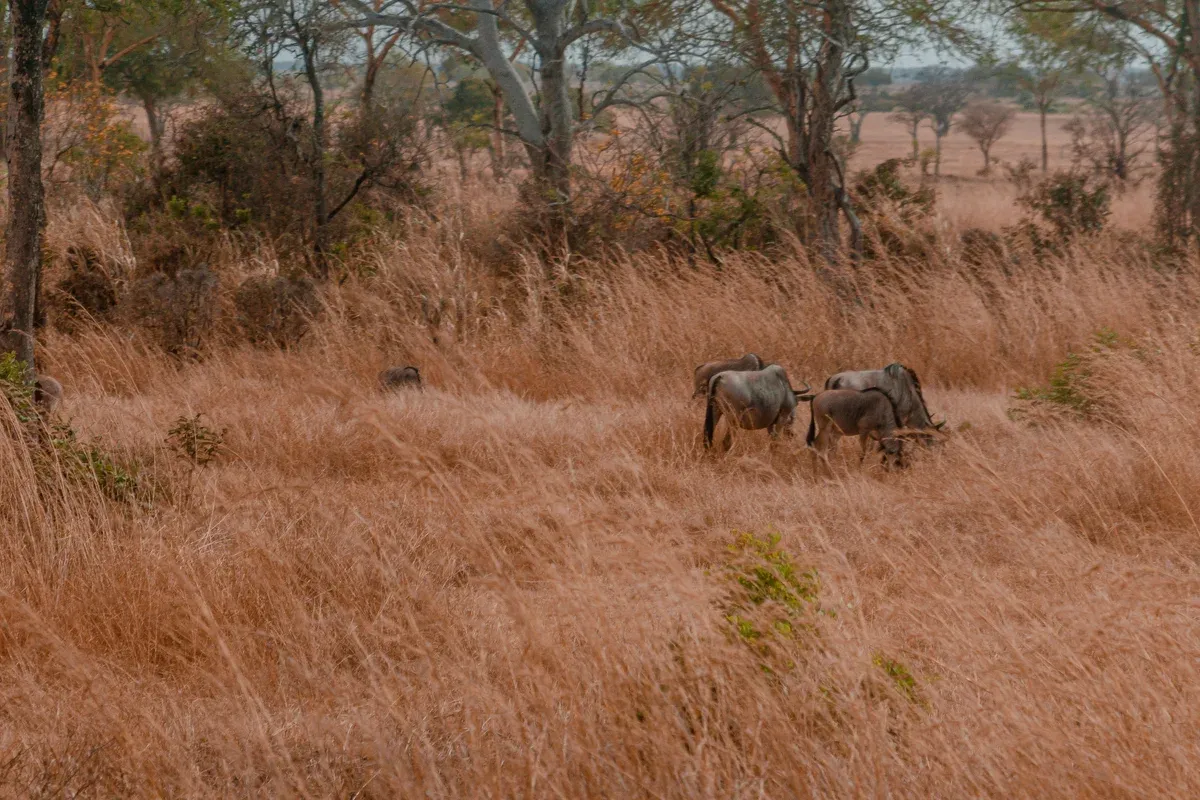
The green season brings fresh vegetation and fewer vehicles, though some tracks turn muddy. Photo: Bärbel Miemietz, CC BY-SA 4.0, via Wikimedia Commons
Which Months Suit the Wildebeest Migration?
The Ndutu plains suit late December to April, and late February and March is the best time in the Ngorongoro area, says the NCAA.
The migration never stops, so the month you pick decides which scene you may get.
Calving Season in the South
The NCAA describes Ndutu as a calving ground for the wildebeest migration, where thousands of calves are born each season, and recommends the Ndutu plains from late December to April. It recommends late February and March as the best time to see the wildebeest migration in the Ngorongoro area, because breeding draws many predators.
After April the herds move north again. If calving is your goal, aim for the Ndutu plains between late December and April and expect green scenery.
River Crossings in the North
The herds move north after the Ndutu season, and the Mara River crossings in northern Serengeti fall in the dry months. Ask your operator where the herds are for your dates. Nobody can promise a crossing on a given day, so give yourself several days in the north.
For the full route, see the safari in Tanzania and Zanzibar homepage and the Serengeti balloon safari if you want a different view of the plains.
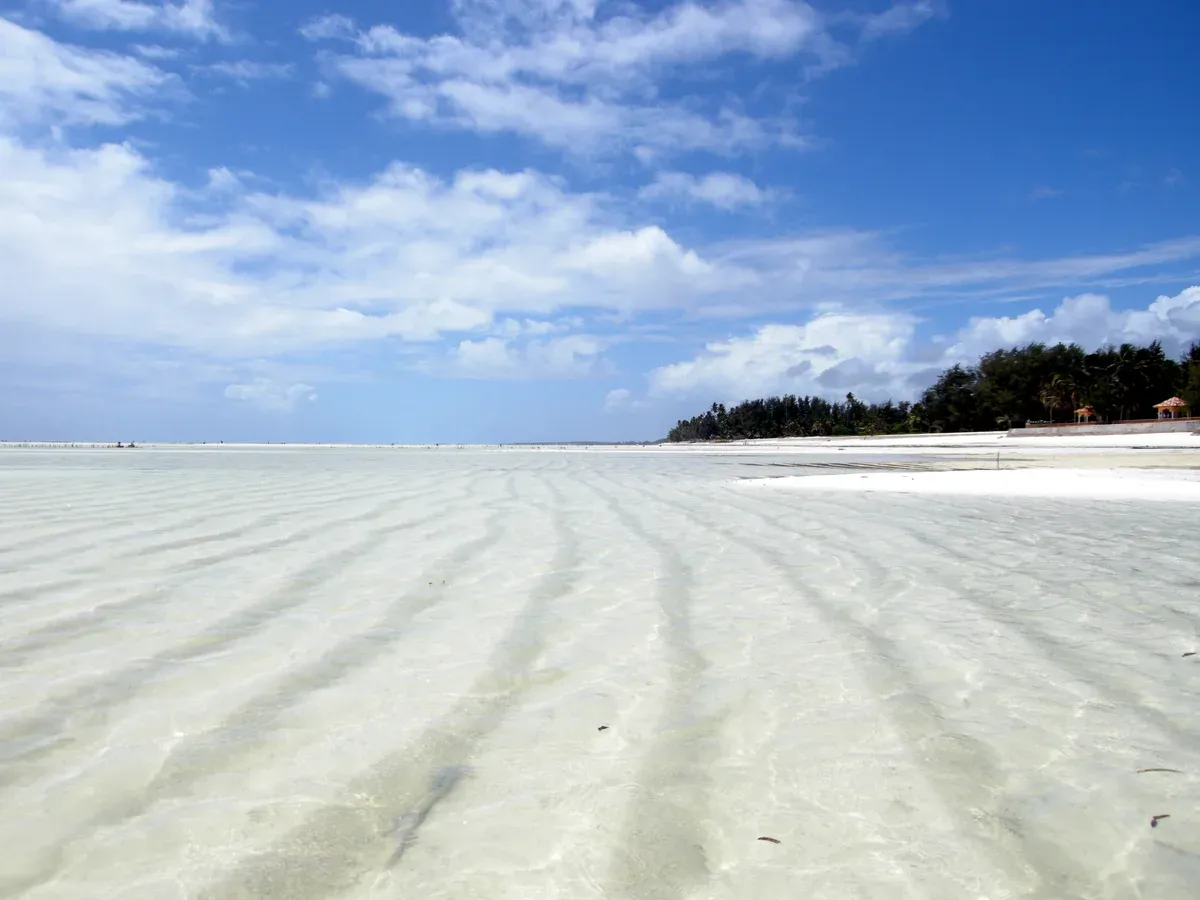
Pair the safari with a beach stay in the dry months for the clearest water and the least rain. Photo: Matt Kieffer from London, United Kingdom, CC BY-SA 2.0, via Wikimedia Commons
Tours That Fit
These Serengeti and Mikumi trips run on the calendar above.
 from $599
Most reviewed
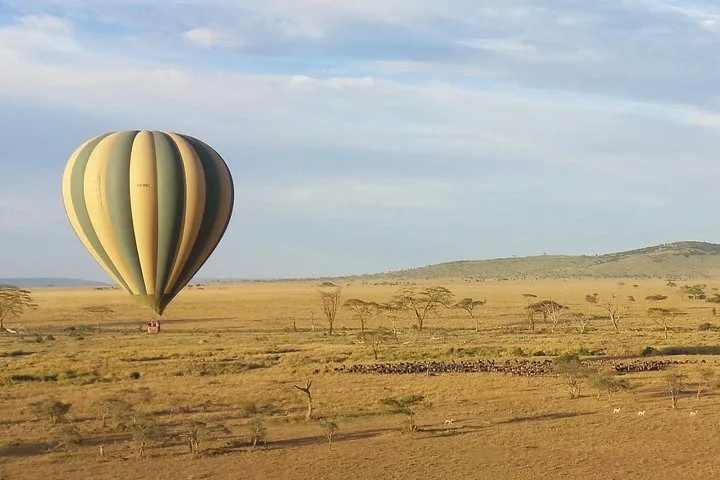
Serengeti Balloon Safari with Bush Breakfast
The original Serengeti balloon flight at sunrise with a bush breakfast after landing, booked as an add-on to a Serengeti safari.
Check Availability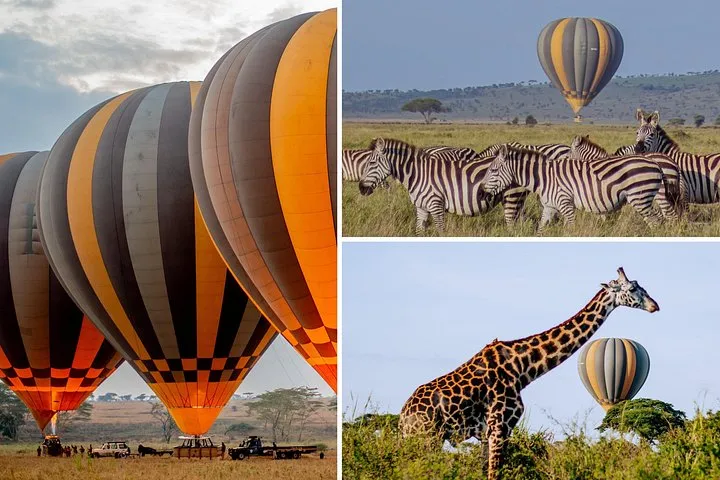 from $599
Weight limit 120 kg
Serengeti Balloon Safari and Bush Breakfast (Miracle Experience)
A sunrise balloon flight over the Serengeti with breakfast, for travellers up to 120 kg.
Check Availability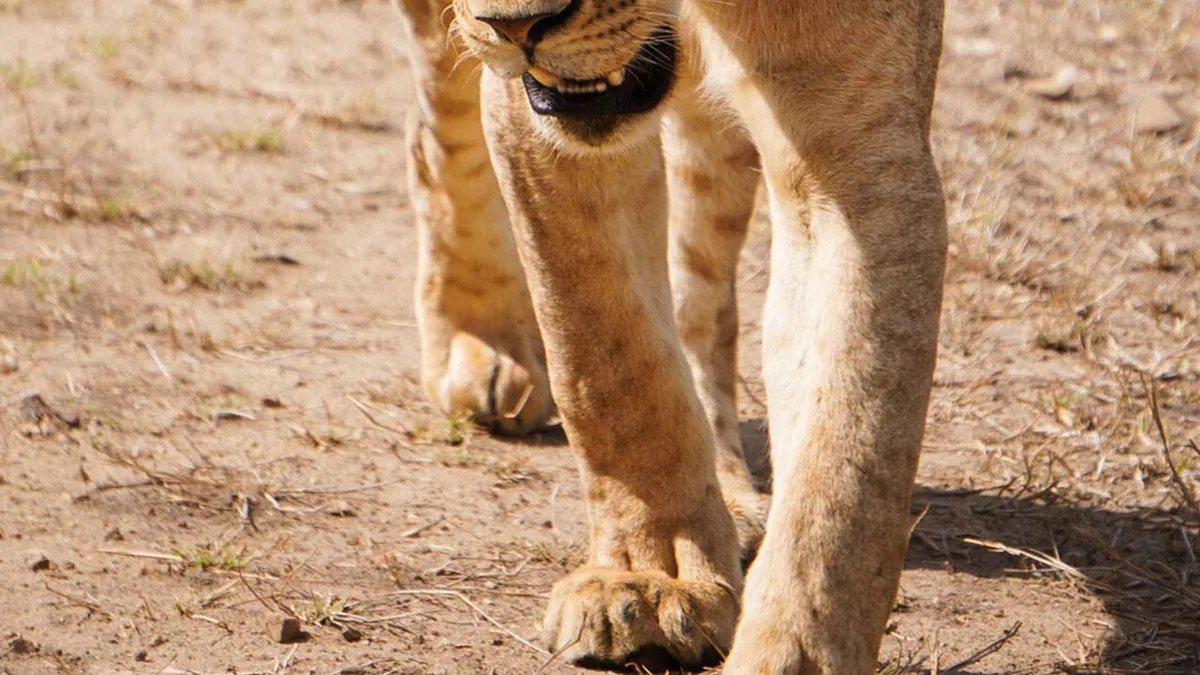 from $445
Most booked
Mikumi Day Safari by Flight from Zanzibar with Bush Lunch
The most-booked fly-in day: a morning flight to a Mikumi airstrip, shared game drives and a bush lunch, back on the island the same evening.
Check AvailabilityWhen Is the Best Time to Visit Tanzania and Zanzibar?
For both, June to September is the best overlap, because those are the dry months the Tanzania Meteorological Authority names for the whole country.
Zanzibar rains do not match the park rains, so check both before you book.
The Zanzibar Rain Pattern
The Tanzania Meteorological Authority describes Zanzibar as bimodal. The long rains, called Masika, run roughly March to May. The short rains, called Vuli, run roughly October to December. The same authority lists areas with two rainy seasons as the northern coast, the northeastern highlands, the Lake Victoria basin and Zanzibar, which means both Unguja and Pemba.
The dry months, June to September, give Zanzibar its clearest weather. That is the same window as the dry safari season, which makes it the easiest period to combine a beach stay with the parks.
November to December is the odd one out. The Zanzibar short rains begin while the parks are still drying out in the south, so beach days can be wet even when a Mikumi day trip is fine.
What Applies in Every Month
Every foreign visitor needs the mandatory inbound travel insurance from the Zanzibar Insurance Corporation. The policy covers 92 days and now also applies to visitors entering Tanzania Mainland from 1 October 2026. The Mikumi and Nyerere day safari listings show it as not included in the price.
A visitor to both Mainland Tanzania and Zanzibar picks the first destination on the visa form and can visit both without a new visa.
- Insurance: 92 days of cover, mandatory
- Visa: one application covers Mainland and Zanzibar
Sources: Tanzania Meteorological Authority, Zanzibar Insurance Corporation, Tanzania Immigration Services.
Mikumi is the closest park to Dar es Salaam and works as a short stop in the dry season. Photo: Rasheedhrasheed, CC BY-SA 4.0, via Wikimedia Commons
What Is the Best Time for a Day Safari From Zanzibar?
Mikumi and Nyerere day trips follow the dry season, with Mikumi dry from May to November and Nyerere dry from June to about November.
Most fly-in day trips from Zanzibar go to the southern parks, which have their own calendar.
Mikumi and Nyerere Seasons
TANAPA says Mikumi's dry season lasts from May to November and that roads allow visits all year. Nyerere's dry season runs from June to about November, and the park is green from December to February.
The Rufiji River flows through the northern part of Nyerere and creates oxbow lakes that attract hippo, crocodile and other wildlife in the dry season. Dry months are therefore the stronger choice for the Selous.
What the price covers matters as much as the month. Fly-in day trips include the return flight, while the ferry and train option is a different trip and the private 3-day trips do not state the transport, so ask the operator.
Day Trips Compared
The table below sets the Zanzibar day and short trips side by side. Prices are per person as listed by the operators. Fees for the Zanzibar insurance are separate unless the operator says otherwise.
| Trip | Price | Duration | Operator |
|---|---|---|---|
| Mikumi Day Safari by Flight from Zanzibar with Bush Lunch | $445 | 8-10 hours | Beach & Safari Holidays |
| Mikumi National Park Fly-In Day Safari from Zanzibar | $494 | 10 hours | Hola Africa |
| Mikumi Safari by Twin-Engine Plane from Zanzibar | $525 | 10.5-12 hours | Ocean Blue Zanzibar |
| 3-Day Mikumi Safari from Zanzibar by Ferry and Train | $720 | 3 days | Safe Zanzibar Tours & Safari |
| Safari vehicle on a sandy track in Nyerere (Selous) National Park on a day trip by flight from Zanzibar | $430 | 8 hours | Beach & Safari Holidays |
Source: TANAPA.
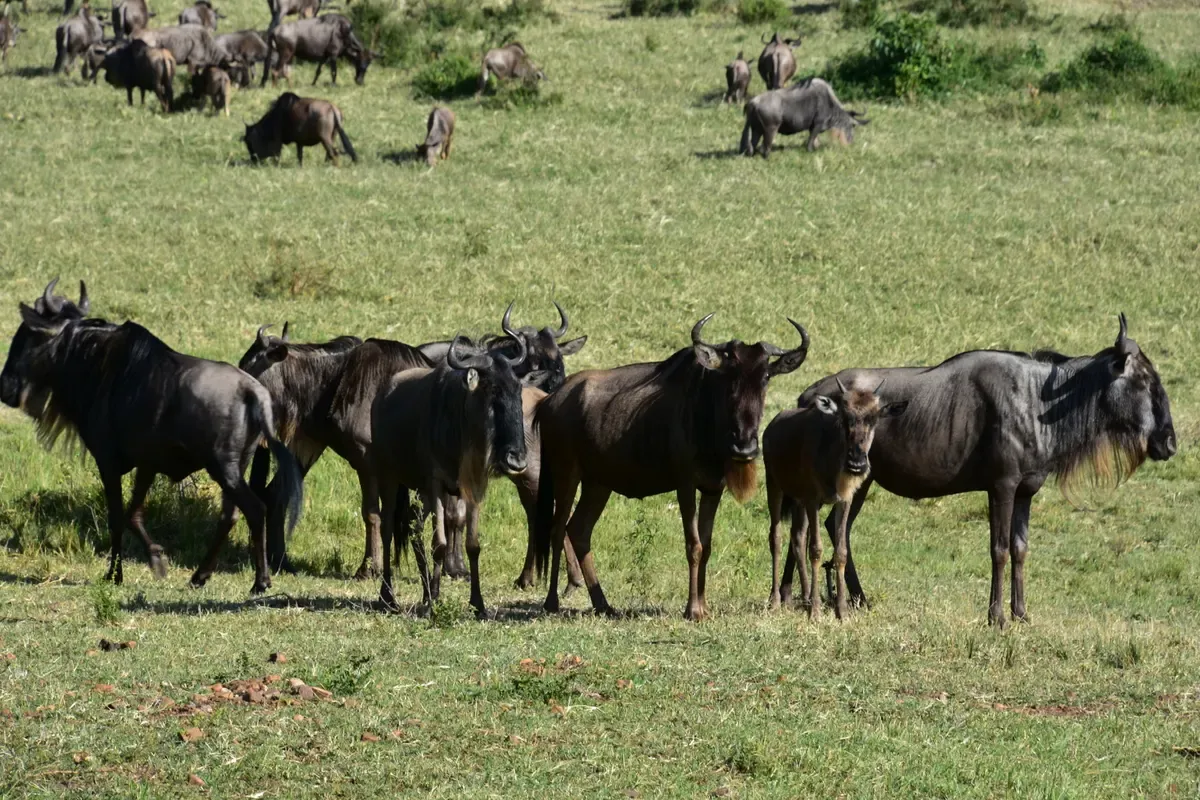
Herds in the north around the river are best seen from July to October. Photo: Richard Mortel from Riyadh, Saudi Arabia, CC BY 2.0, via Wikimedia Commons
Does the Best Time Change for Calving, Birds or Big Five?
Yes, the dry season suits the Big Five and the green season suits calving.
Pick the season by the animal you care about most.
Match the Month to the Goal
The best time to see the Big Five is the dry season from June to October, when animals gather around water sources and vegetation is thinner. Nobody can promise a sighting, though.
For calving, aim for the Ndutu plains from late December to April. For river crossings in the north, travel in the dry months and ask your operator where the herds are.
| Goal | Months | Season |
|---|---|---|
| Big Five | June to October | Dry season |
| Mara River crossings | Dry months | Dry season |
| Wildebeest calving | Late December to April | Green season |
| Lowest rates | April to May | Heavy rain |
Source: Tanzania Meteorological Authority.
Best Time to Visit Tanzania FAQ
Is it safe for Americans to travel to Tanzania right now?
Official advisories decide this, so read your own government's current advisory before booking. Canada says road safety is poor, fatal accidents are common and driving after dark outside cities is risky, so book a trip with a driver through safari in Tanzania and Zanzibar.
Are safaris better in Kenya or Tanzania?
Neither is better in every month. The herds cross between the two, and the NCAA recommends the Ndutu plains from late December to April. Here the focus is Tanzania, starting with the Serengeti balloon safari.
What month is best to go to Tanzania?
June to October is best for most wildlife, with June to September the dry months the Tanzania Meteorological Authority names. Book the Mikumi day safari in that window for the clearest skies.
Is Tanzania cheap or expensive?
It depends on the trip. The Zanzibar fly-in day safaris here run from $430 to $525 per person, while the Serengeti balloon safari is $599 per person. Rates are lower in April and May because of the heavy rain.
Is November a good time to visit Tanzania?
November can be a good safari month despite the green season. The short rains begin in Zanzibar and the Tanzania Meteorological Authority puts the Vuli rains from October to December. See the Nyerere day safari, since Nyerere is dry until about November.
Do I need insurance to visit Zanzibar in any month?
Yes. The Zanzibar Insurance Corporation sells mandatory inbound travel insurance with a 92-day coverage period, and it applies to Mainland entry from 1 October 2026. Check the 3-day Mikumi ferry and train safari to see what each trip says about it.
More Guides
- Tanzania vs Kenya Safari: Which Is Better for a First Safari?
Tanzania vs Kenya safari in 2027: one visa covers the Mainland and Zanzibar, day trips start at $430. See the comparison.
- Mikumi National Park Safari from Zanzibar: Fly-In Day Trips Compared
Mikumi National Park in 2027: fly-in day safaris from Zanzibar from $445, 8-10 hours to 12 hours. Compare tours.
- Selous Game Reserve Safari from Zanzibar: Nyerere National Park Day Trips
Selous Game Reserve in 2027: fly-in day safaris from Zanzibar from $430 into Nyerere National Park. Compare tours.